
Why Refrigerant Leaks Are Serious Problems
Refrigerant is the lifeblood of your air conditioning system. It absorbs heat from your home and releases it outdoors, creating the cooling effect. When refrigerant leaks from your AC system, several serious problems occur:
- System loses cooling capacity and blows warm air
- Air conditioner runs constantly trying to reach set temperature
- Compressor works harder, consuming more electricity
- Ice forms on evaporator coil and refrigerant lines
- Compressor can overheat and fail (expensive repair)
- Environmental concerns (refrigerants are regulated)
- Wasted money on electricity without adequate cooling
Signs Your Air Conditioner Has a Refrigerant Leak
Recognizing the symptoms of low refrigerant helps you get timely professional service:
Cooling Performance Issues:
- Air conditioner blowing warm or lukewarm air instead of cold
- Home takes much longer to cool down than normal
- AC runs constantly but never reaches set temperature
- Some rooms don’t cool while others do
- Temperature differences greater than 20°F across evaporator coil
Ice and Frost Formation:
- Ice buildup on refrigerant lines (copper pipes) going to outdoor unit
- Frost on evaporator coil inside air handler
- Frozen condensate drain line
- Ice on outdoor refrigerant connections
- Excessive moisture around indoor unit
Sounds and Smells:
- Hissing or bubbling sounds near refrigerant lines
- Gurgling noises from AC when running
- Chemical or sweet smell (some refrigerants have odor)
- Unusual sounds from compressor
System Behavior:
- AC cycles on and off more frequently than normal
- System shuts down unexpectedly
- Circuit breaker trips repeatedly
- Compressor struggles to start
Utility Bills:
- Dramatically increased electric bills during cooling season
- Energy costs rising without usage changes
- System running longer hours to maintain temperature
Physical Evidence:
- Oily residue around refrigerant connections (refrigerant mixed with oil)
- Corrosion on refrigerant lines or fittings
- Visible damage to refrigerant lines
Common Causes of Refrigerant Leaks in Littleton AC Systems
Understanding why refrigerant leaks develop helps prevent future problems:
Corrosion and Age:
- Copper refrigerant lines corrode over time (especially underground lines)
- Coil corrosion from exposure to moisture and chemicals
- Formic acid corrosion (common in newer homes with formaldehyde in materials)
- Galvanic corrosion where dissimilar metals connect
- General aging of seals and fittings (15+ year old systems)
Physical Damage:
- Lawn mowers, weed trimmers damaging outdoor refrigerant lines
- Vibration damage from compressor operation over years
- Impact damage from debris, hail, or moving equipment
- Rodent damage to refrigerant lines
- Settling or shifting of home affecting line connections
- Tree roots crushing underground line sets
Installation Problems:
- Poor brazing during initial installation
- Improper flare connections
- Over-tightened fittings causing stress cracks
- Insufficient support causing vibration damage
- Rubbing against sharp edges
- Line sets routed improperly
Service-Related Issues:
- Damage during previous repair or maintenance
- Improper refrigerant recovery techniques
- Connection issues from adding refrigerant
- Technician error damaging components
Manufacturing Defects:
- Factory coil leaks (rare but can occur)
- Defective fittings or valves
- Pinhole leaks in copper tubing
- Faulty brazing at factory
Environmental Factors:
- Formic acid from building materials attacking copper
- Salt exposure (less common in Littleton)
- Extreme temperature cycling
- UV exposure degrading rubber components
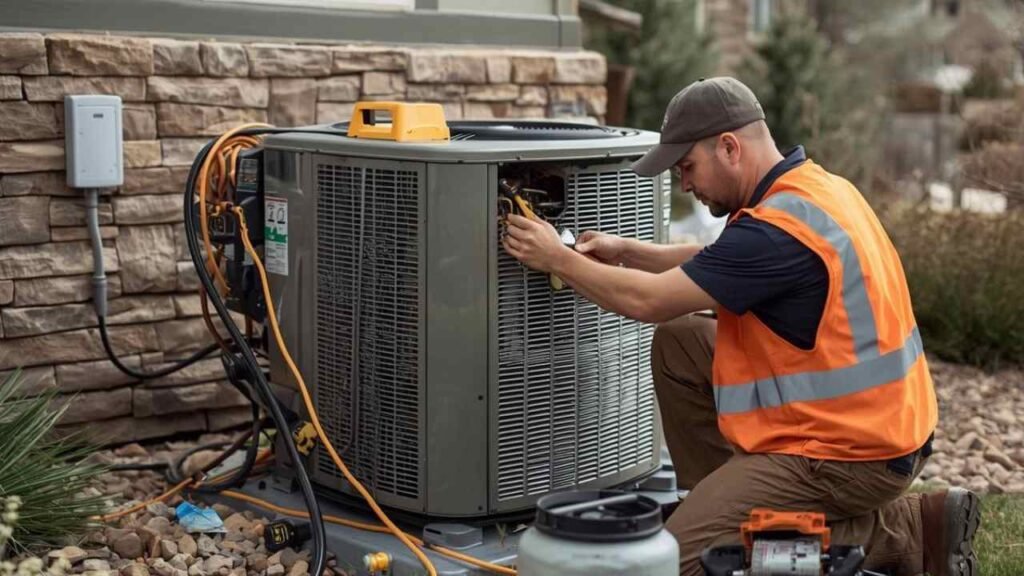
Our Refrigerant Leak Detection Process
Step 1: System Evaluation
We review symptoms, maintenance history, and refrigerant pressures to assess leak likelihood before any hands-on work begins.
Step 2: Visual Inspection
We examine all refrigerant lines, coils, fittings, and connections — looking for oily residue, corrosion, or physical damage.
Step 3: Electronic Leak Detection
Sensitive electronic detectors pinpoint trace refrigerant leaks invisible to the naked eye.
Step 4: Nitrogen Pressure Testing
We pressurize the system with nitrogen and monitor for pressure drops to confirm leak locations and verify system integrity after repairs.
Step 5: UV Dye Testing
For hard-to-find leaks, UV-reactive dye is circulated through the system and identified under UV light.
Step 6: Soapy Water Testing
A simple but effective final check — applied to fittings and connections where bubbles reveal any remaining leak points.
Our Comprehensive Refrigerant Leak Repair Service
Once we’ve located your refrigerant leak, we provide professional repair:
Leak Repair Options:
Brazing and Soldering:
- Proper repair method for copper refrigerant lines
- High-temperature silver brazing creates permanent seal
- Appropriate for line leaks and small hole repairs
- Industry-standard professional technique
Component Replacement:
- Replace leaking evaporator coil
- Replace condenser coil if leaking
- Replace damaged line set sections
- Install new valves or fittings
- Replace damaged filter drier
Connection Repairs:
- Remake flare connections
- Re-braze leaking joints
- Tighten or replace compression fittings
- Repair threaded connections
After Leak Repair:
Pressure Testing:
- Pressurize system to verify repair successful
- Hold pressure for appropriate time period
- Ensure no additional leaks present
- Confirm system integrity
System Evacuation:
- Use vacuum pump to remove air and moisture
- Critical step before adding refrigerant
- Prevents compressor damage
- Ensures optimal system performance
- Deep vacuum to proper micron level
Refrigerant Recharge:
- Add precisely correct amount of refrigerant
- Follow manufacturer specifications exactly
- Use refrigerant scale for accurate charging
- Verify proper subcooling and superheat
- Don’t over or undercharge
Performance Verification:
- Run system through complete cooling cycle
- Measure temperature split across coil
- Check refrigerant pressures during operation
- Verify proper cooling capacity restored
- Test system for adequate performance
Important Information About R-22 Refrigerant (Freon)
If your AC was installed before 2010, it likely uses R-22 (Freon) — which has been banned from production in the US since 2020. Only recycled supply remains, driving costs to $100–$150+ per pound. A typical recharge of 5–15 lbs can run $500–$2,000+ in refrigerant alone.
Your R-22 Options
Repair & Recharge with R-22 — Viable for small leaks on newer R-22 systems, but expensive and increasingly difficult as supply shrinks.
Convert to a Drop-In Substitute — Less costly than R-22, though not all systems are good candidates and performance may vary.
Replace the System — Often the smartest long-term investment. New systems use affordable R-410A, run significantly more efficiently, and come with full warranties and potential rebates.
We’ll Help You Decide
Our technicians give honest recommendations based on your system’s age, leak size, refrigerant needed, and long-term costs — so you can make the best call for your budget.
Why Choose DC Mechanical for Refrigerant Leak Repair in Littleton
EPA-Certified Technicians
All technicians are EPA Section 608 certified for safe, legal, and environmentally responsible refrigerant handling across all refrigerant types — R-22, R-410A, R-32, R-454B, and commercial refrigerants.
Advanced Leak Detection Equipment
We use electronic leak detectors, nitrogen pressure testing, UV dye, precision refrigerant scales, and professional vacuum pumps to locate and confirm leaks accurately.
Honest Assessments
We give you clear repair vs. replace options with upfront pricing, no pressure, no upselling. Our job is to help you make the best decision for your situation.
Quality Repairs That Last
Every repair uses proper brazing techniques, quality parts, correct refrigerant charging, and thorough post-repair testing, backed by a workmanship warranty.
Refrigerant Leak Repair Cost in Littleton
Refrigerant leak repair costs vary significantly based on multiple factors:
Cost Factors:
- Leak location – Accessible leaks less expensive than hidden leaks
- Refrigerant type – R-22 much more expensive than R-410A
- Amount of refrigerant needed – Depends on system size and how much leaked
- Repair complexity – Simple fitting repair vs. coil replacement
- Parts required – Component replacement more expensive
- Labor time – Detection and repair difficulty
Typical Price Ranges:
- Leak detection service – $150-400
- Simple leak repair (accessible fitting) – $200-500
- Refrigerant line repair – $300-800
- Evaporator coil replacement – $800-2,500
- Condenser coil replacement – $600-2,000
- R-22 refrigerant charge – $500-2,000+ (refrigerant cost alone)
- R-410A refrigerant charge – $200-600
Important Note: Simply adding refrigerant without fixing the leak is wasteful and irresponsible. You’ll pay for refrigerant that just leaks out again. Proper service always includes leak repair.
Preventing Refrigerant Leaks in Your Littleton AC System
Schedule Annual Maintenance
Professional tune-ups catch small leaks, early corrosion, and improper refrigerant charges before they become costly repairs — the single most effective prevention step for Littleton homeowners.
Protect Your Outdoor Unit
Keep 2 feet of clearance, trim carefully around refrigerant lines, and ensure proper drainage. Weed trimmers and lawn equipment are a leading cause of line damage.
Monitor Performance Year-Round
Watch for reduced cooling, ice formation, unusual sounds or odors, and rising energy bills — all early warning signs of a developing refrigerant leak.
Always Use a Licensed Technician
Refrigerant handling requires EPA certification. DIY repairs are illegal and can worsen leaks — always choose a certified Littleton HVAC contractor for diagnostics and recharging.
Refrigerant Leak Repair Service Area
DC Mechanical serves all Littleton neighborhoods plus Highlands Ranch, Centennial, Englewood, Ken Caryl, Columbine, Roxborough, Lone Tree, Parker, Castle Rock, Greenwood Village, Cherry Hills Village, Lakewood, Arvada, Wheat Ridge, and throughout Douglas, Arapahoe, and Jefferson Counties.